Agenda & Minutes
 Regional Bylaws
 Employment/Volunteer Opportunities
 Notifications
 I Want To...


Wildfire Recovery and Re-entry Information
*New*: Click here to visit the Faulder and Meadow Valley Wildfire Recovery Regional Connections page
For questions regarding RDOS recovery and re-entry information, call 250-490-4225 for assistance.
Bald Range Wildfire Recovery Centre - New Summerland location opens Tuesday, September 1, 2026
- Open Tuesday to Saturday, beginning September 1, 2026:
- Monday to Friday from 10:00 am to 5:00 pm
- Saturday from 10:00 am to 1:00 pm
- Location: Giant’s Head School, 10503 Prairie Valley Road
- Services include information and resource support for needs arising from the fire
- Partner agency recovery and Emergency Support Services (ESS) volunteers on-site on Fridays
Help protect the Faulder Water System and Meadow Valley Aquifer from contamination.
Click the link to download the Information Sheet: Faulder Water System and Meadow Valley aquifer
BC Assessment - Residential - Single Family Dwelling Damage Declaration
Summerland Landfill Fire Debris Management Requirements - Burnt structures information, September 3, 2026
Recovery Information - Electoral Area "F"
Updated September 3, 2026
Information Sheet: Help protect the Faulder Water System and Meadow Valley aquifer from contamination
Help protect the Faulder Water System and Meadow Valley Aquifer from contamination
Following the Bald Range Wildfire, the Regional District of Okanagan-Similkameen (RDOS) is encouraging property owners in the Faulder area to identify and inspect any wells on their property.
When the Faulder Water System was established in 1993, many homes transitioned from private wells to the community water system. As a result, some properties may still contain older wells that were never properly decommissioned. Property owners may not be aware these wells exist.
Wildfire damage and recovery activities can affect well heads and caps, creating a pathway for contaminants to enter the Meadow Valley Aquifer, the groundwater source that supplies drinking water to residents in Meadow Valley, Faulder, and along Princeton-Summerland Road.
Property owners are encouraged to:
1. Locate your well - Before debris removal or site restoration begins, identify and mark the location of your well to prevent accidental damage. Not sure if there is a well on your property?
RDOS Utilities staff can assist with a property search. Call 250-490-4135.
2. Inspect the well head and cap - Wildfire heat may damage the well cap seal that helps protect groundwater from contamination. Check for:
- Melting or warping
- Cracks or breaks
- Missing or displaced parts
- Openings where ash, dust, debris, or water could enter
3. Repair any damage - If the well head or cap is damaged, or if you are unsure of its condition, contact a qualified well driller for assessment and repairs.
4. Test your water - Follow Interior Health guidance for testing private well water, especially if your property was affected by wildfire or restoration activities:
- interiorhealth.ca/health-and-wellness/natural-disasters-and-emergencies/wildfires#water-quality-and-your-health-
- interiorhealth.ca/health-and-wellness/environmental-health-and-hazards/drinking-water
For further information, please email RDOS Communications at communications@rdos.bc.ca or call 250-490-4148 or toll-free at 1-877-610-3737.
September 1, 2026
The Regional District of Okanagan-Similkameen is transitioning the following areas, from Evacuation Order status to Prohibit Entry Order (formerly named Restricted Access Status) effective August 31, 2026, at 5:00 pm:
• Specified properties within Faulder, Electoral Area “F”
• 26 Marsh Lane, 155 Marsh Lane and 464 Fish Lake Road, Electoral Area “F”
• 351 Callan Road and 365 Callan Road, Electoral Area “F”
This transition represents an important step in the community's recovery process and is intended to support residents as they begin restoring and rebuilding their properties following the emergency.
This name change to Prohibit Entry Order does not affect any of the details of the order.
What does this mean for residents?
Prohibit Entry Order status is designed to give property owners greater flexibility to manage their recovery while maintaining the safety and security of the affected area. Residents will continue to have the ability to:
▪ Access available emergency recovery programs, supports, and services for which they may be eligible
▪ Access their properties as needed. Residents will be required to display their Access Permit on their vehicle dashboard to facilitate quicker and smoother access
▪ Remove personal belongings and possessions from their properties
▪ Conduct debris removal, cleanup, and recovery activities
▪ Arrange for insurance representatives, adjusters, and other qualified professionals to assess property damage
▪ Authorize contractors, tradespeople, suppliers, utility providers, building officials, and other service providers to access their property for repairs and recovery work
Why is Prohibit Entry Order necessary?
While residents are being provided greater access to their properties, recovery operations remain ongoing and the continuation of emergency support services. Restricting access to authorized individuals helps ensure that recovery work can continue safely, efficiently, and securely. Limiting unnecessary traffic and activity in the affected area will:
▪ Protect damaged homes, properties, and infrastructure
▪ Support the ongoing work of emergency responders, utility crews, contractors, and recovery personnel
▪ Reduce congestion and safety risks in areas where hazards may still exist
▪ Help maintain the privacy, security, and well-being of residents as they recover from the impacts of the emergency
Prohibit Entry Order measures are intended to discourage entry by:
▪ Unauthorized individuals
▪ Trespassers
▪ Sightseers and curiosity seekers
▪ Individuals who are not residents and have no legitimate reason to enter the affected area
▪ Media representatives who have not received authorization to access restricted areas
RDOS Re-entry Information Guides
Not sure if this applies to you? To view properties on Restricted Access Status or Evacuation Rescind, visit the interactive map at rdos.bc.ca.
Questions: Call 250-490-4225 for assistance.
RDOS Re-Entry Information Guides:
Electoral Area "F" Re-Entry
Electoral Area "H" Re-Entry
Past Evacuation Alerts and Orders Rescinds
Please note, this list is not exhaustive. For the most up-to-date information, visit the interactive map at rdos.bc.ca.
August 29, 2026
August 28, 2026
View the Evacuation Order Rescind and map - Brent Lake, Shingle Creek Area, Electoral Area “F”
Additional Recovery Resources
Recovery - Bald Ridge Wildfire (K51490)
Recovery Services - Bald Range Wildfire Recovery Centre
Beginning Tuesday, September 1, 2026, the Recovery Center and services will be available at:
Giant's Head School: 1053 Prairie Valley Road, Summerland
Hours of Operation:
- Tuesday to Friday - 10:00 am to 5:00 pm
- Saturday - 10:00 am to 1:00 pm
BC Assessment - Residential - Single Family Dwelling Damage Declaration
Ash Sifting Program - Samaritan's Purse Canada
Samaritan's Purse arrived Wednesday, September 2, and has set up at the gravel parking lot at Dale Meadows Sports Field in Summerland. The organization will be available for approximately five weeks to support people who lost their homes in the wildfire.
Trained volunteers, equipped with appropriate personal protective equipment, will conduct ash sifting activities at destroyed home sites to help families recover important personal belongings and keepsakes.
All Samaritan’s Purse services are provided free of charge.
To register:
- Call 1-833-738-7743
- Leave a message with your contact information
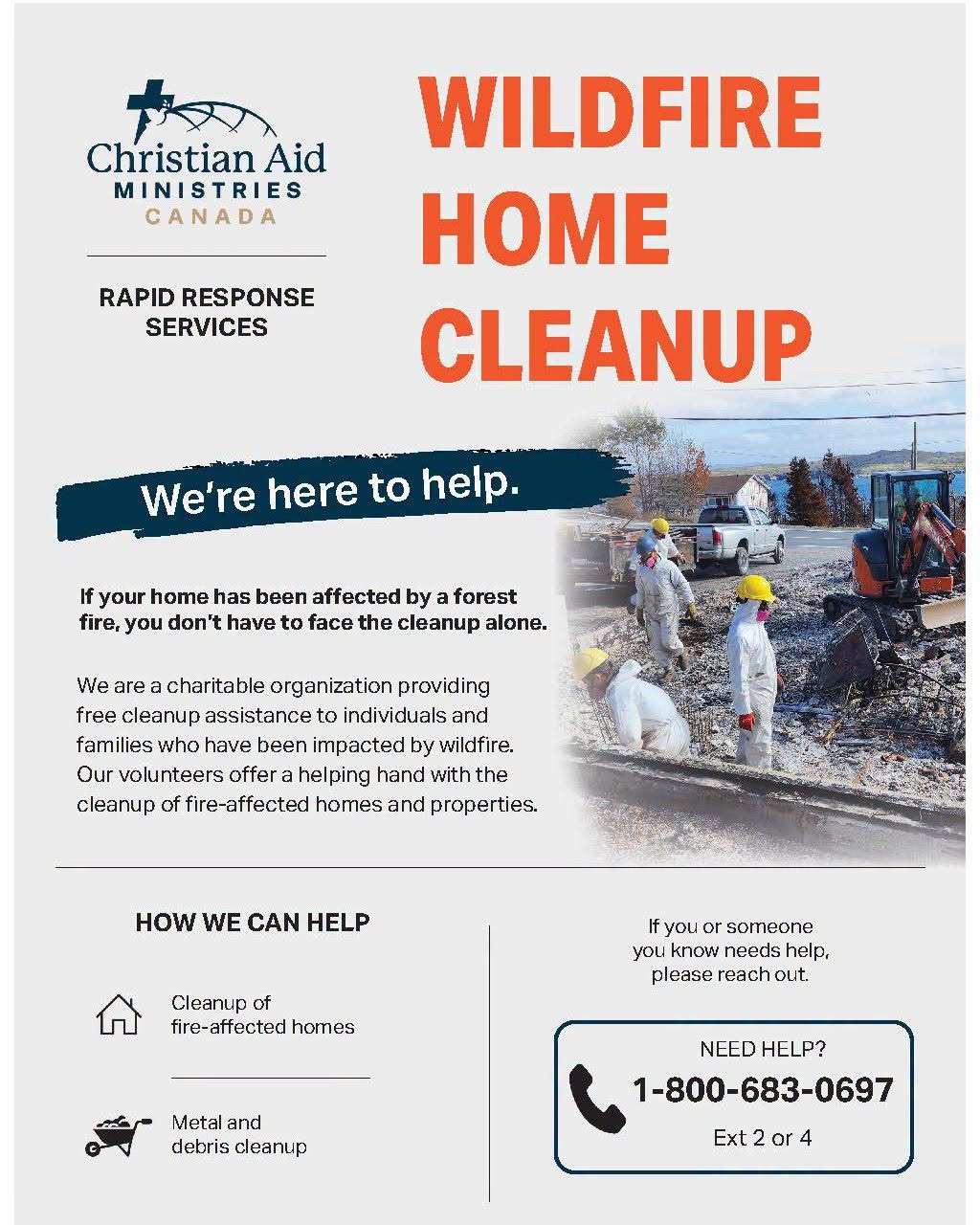
Christian Aid Ministries Canada - Wildfire Cleanup
Charitable organizaiton providing free cleanup assistance to individuals who have been impacted by wildfire.
Volunteers offer a helping hand with the cleanup of fire-affected properties.
- Call 1-800-683-0697 to register
Emergency Support Services (ESS) - Reception Centre Closure
The ESS Reception Centre in Penticton closed on August 28, 2026, at 4:00 pm.
Residents requiring assistance can continue to contact ESS:
- BC Evacuee Helpline 1-800-387-4258 (7:30 am to 5:00 pm daily)
- 250-486-1890 (10:00 am to 4:00 pm daily)
For the latest official updates, visit the RDOS Hot Topics page and review the most recent Information Release.
For the most current wildfire information:
- Watch RDOS YouTube Live Updates for ongoing community updates.
- Visit BCWildfire.ca for wildfire status updates.
- View the BC Wildfire Service Map. Select All Layers and then Evacuation Orders and Alerts to view current evacuation information
Debris removal
- Debris removal for residents with burnt structures: RDOS and Summerland are preparing plans to manage the burnt debris created from the wildfire – request that people do not bring in burnt materials to Campbell Mountain Landfill and wait until Summerland Landfill is prepared to receive the materials.
- The Summerland landfill will be taking all the burnt debris from Summerland and Area “F” properties once it is fully reopened.
Access
- Access restrictions remain in place for designated properties in Faulder, South Meadow Valley, and Callan Road. Access remains limited to authorized property owners and approved individuals displaying a valid Access Permit.
- Princeton-Summerland Road remains closed to through traffic until further notice. Access is limited to residents with a valid Access Permit, residents in restricted areas, and authorized crews supporting recovery efforts. Traffic control is in place. Please use Highway 5A or Highway 3 as alternate routes.
Faulder Water System and Meadow Valley Aquifer
- The RDOS, in consultation with the Interior Health Authority (IHA), has issued a DO NOT CONSUME order effective immediately (Thursday, September 10, 2026). Click here to view the DO NOT CONSUME order.
- The Faulder Water System operations team has completed full pressurization and flushing of the distribution system. Residents with homes remaining have service access restored. For residents who are interested in temporary water service access, please reach out to RDOS Utilities to request a turn on: utilities@rdos.bc.ca or 250-490-4135.
-
Fauler Water System Update: Residential services were heavily impacted by the Bald Range Wildfire, including the loss of remote communication and the reservoir drained. Community wells, the pumphouse, treatment plant, generators and reservoir sustained minimal damage, but powerlines, trees, and telecommunication lines were severely impacted. Sampling stations and hydrants are being repaired, and power has been restored to the treatment plant. More information will be provided once confirmed.
- Help protect the Faulder Water System and Meadow Valley Aquifer from contamination. Wildfire damage and recovery activities can increase the risk of contamination entering private wells and groundwater sources.
- Click the link to download the Information Sheet: Faulder Water System and Meadow Valley Aquifer
Water information
For general Boil Water Notice information:
- Drinking Water For Everyone: Interior Health Clean Drinking Water
For businesses:
Donations
- Financial donations: Community Foundation of the South Okanagan Similkameen
- Emergency Donations and Distribution Centre: OneSky Community Resources, 10121 Main Street, Summerland, Monday to Friday, 9:00 am - 3:30 pm. The list of currently needed items is monitored and updated daily at oneskycommunity.com/wildfire-response/
- Clothing and personal items: Free Store, 2130 Government Street, Penticton, open 10:00 am – 4:00 pm, Monday to Saturday.
- Clothing and bedding: Salvation Army, 2469 South Main Street, Penticton.
- Help Summerland is a volunteer-organized community resource for connecting people; a community board for emergency mutual aid. Anyone can post what they HAVE (shelter, food, supplies) or what they NEED.
- Information on how to donate to Canadian Red Cross and United way here.
- Canadian Red Cross
- United Way
Services
For District of Summerland re-entry information, visit the District of Summerland re-entry webpage.
Residents are encouraged to check the Summerland Electric Utility address map to confirm the length of a power outage before deciding whether to discard fridge or freezer contents.
RDOS Interactive Map - Unsure if your address is under an Evacuation Alert or an Evacuation Order? Click here to look up your address through the interactive map.
Stay informed
- Click here to register for routine and emergency notifications from the RDOS via email, text, or phone through Voyent Alert!.
- Mental health support: BC Crisis Line 310-6789. Interior Heath
Other important resources
- Click here to view Evacuation Alert and Evacuation Order tips.
- To report a wildfire: 1-888-663-5555 or *5555 on a mobile phone.
- The official BC Wildfire Service (BCWS) app is available for free download in the App Store and Google Play. The app provides up-to-date information on your mobile phone, helping you stay informed about wildfires and wildfire-related events and conditions across B.C.
For further information, please visit rdos.bc.ca or call the RDOS EOC at 250-490-4225.
For the most recent RDOS information releases visit Hot Topics on the RDOS website.
In case of an emergency, call 9-1-1.
District of Summerland Re-entry Information
RDOS Re-entry guides
Please note: This page will be updated as we have more information.
Your safe return to your neighbourhood is our priority. Please make safety your top priority too.
You are returning to a region which was profoundly affected by wildfire, whether your home is still standing or has been damaged or destroyed.
Services that you are used to relying on may be limited for some time. Patience and kindness are always appreciated.
Please respect any directions given to you by emergency officials. Doing so will help keep you, your family and other members of the community safe.
If your property is placed under an Evacuation Alert following the removal of an Evacuation Order, please be aware that a risk from wildfire remains and you should be prepared for possible evacuation.
Re-Entry is a staged process, with different areas of the region being allowed to return at different times. Some areas have been more impacted by the fire than others. There are many things that need to be completed before it's safe to return.
As the information becomes available for each of the staged areas, a new webpage will be created that is specific to that community's needs.
Understanding Re-entry
The following explains what "Re-Entry" means, how it works, and what to expect.
What is Re-entry?
Re-entry is the process that allows residents to return to their homes and properties after an Evacuation Order has been lifted/downgraded to an Evacuation Alert for their area. Re-Entry does not always mean the emergency is over; there may still be an active wildfire nearby, or hazards on your property. It means it is now considered safe enough, under certain conditions, for residents to go back.
How Re-entry Works
Check Your Zone
Before making plans to return, confirm your address falls within the current re-entry area for your zone. Boundaries can change as conditions evolve, and not every part of a neighbourhood is cleared for re-entry at the same time. Select your zone from the sidebar to see the current status, boundary map, and address list.
Review the Re-entry Guide
Each zone page includes a re-entry guide with details to help you safely return home. While returning may bring relief, it's important to take precautions; conditions may have changed, and hazards may remain.
Typical re-entry guides include information on:
- Re-entry checklist for your home and property
- Water safety and water use
- Food safety
- Curbside collection information
- Pets and animals
- Wildlife
- Additional handouts and links for more information